Spirals - or visualizing cycles and patterns
In Cycles and Patterns I talk about how I think most systems - global or local - work. A quick reminder:
Cycles: Cycles are instances of the same idea happening in the same domain after some unspecified amount of time.
Patterns: Patterns are the occurrence of one idea across different domains.
I'd like to embellish the idea with a few visualizations, some of which I hope are useful for me and readers as tools to see and interpret the world.
Lines or Circles?
If you allow me to be bad at graphs for this bit, and present you moderately false dichotomies (a pet peeve of mine), these are usually two ends of the spectrum of most systems.
Some people think most systems are linear in nature as time - they only move forward in one direction. Think "everything is going to be enshittified!" or "AI is going to take ALL Writing/Software/Legal/
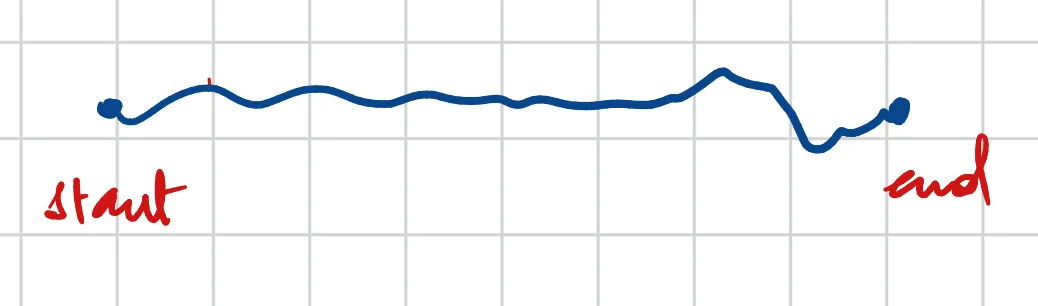
The other end of this perspective is that systems don't really go anywhere. They're the same static views of the world. Think, "Newspapers/Social Media/Banks/Democracy/
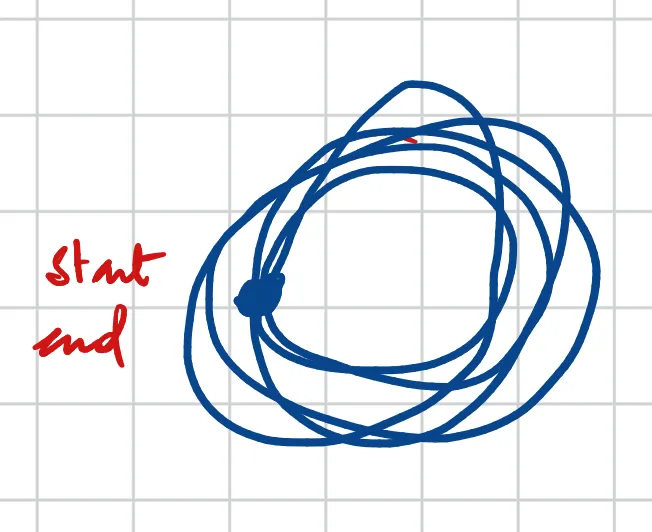
And I think those are two fundamentally flawed but highly frequent views of the world. Like most important matters, things often land somewhere in the middle of the spectrum.
Here's what I think is really going on.
Spirals
When zoomed out appropriately, across a few dimensions (but crucially, time) things are more spirals.
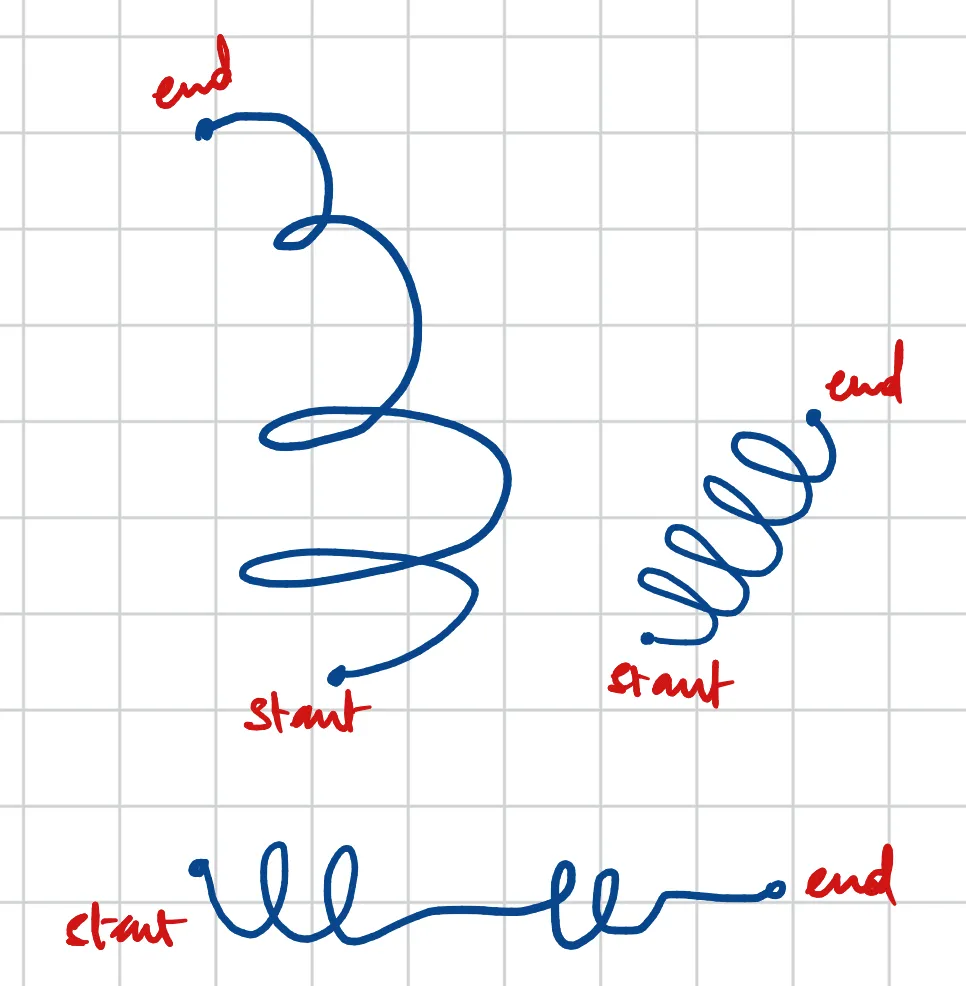
The nature of the spiral is captured in the Mark Twain quote:
History doesn't repeat itself, but it often rhymes
I love the spiral and that visualization. It captures so much nuance!
Spirals as high dimensional perspectives
Spirals as visuals of system progress capture a higher dimension of perspectives, and almost universally subsume all views of that system.
Cycles in Spirals
Cycles - the same idea repeating after an unspecified amount of time is captured in loops - consecutive or separate.
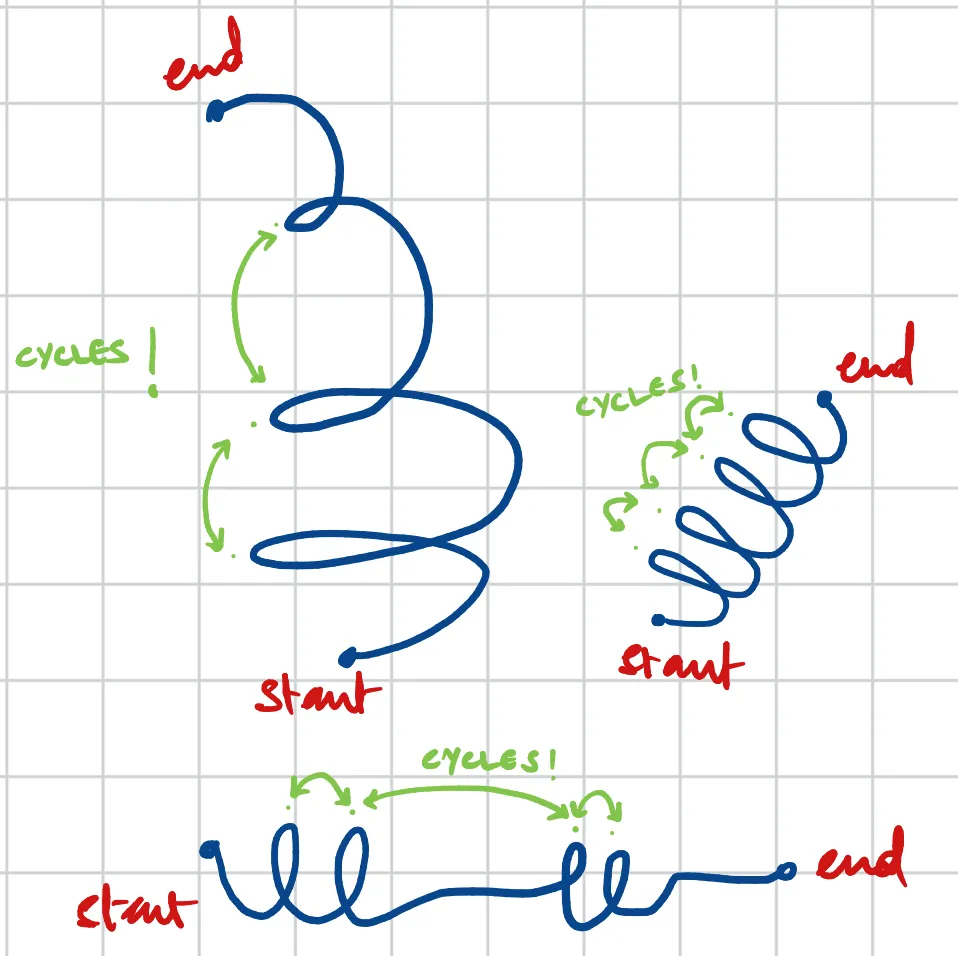
From a certain perspective, they seem like things repeating. "Oh, Digital streaming is the same as what cable was. I pay for a group of channels and I can only get a limited set - The Wire is on HBO, Ted Lasso is on Apple TV - and I have to pay for both separately, just like cable! Nothing has really changed"
What the Spiral appreciates is that there was a meaningful change in how content was delivered - over the internet vs over physical cable/satellite.
It gives you nuance. Which, if appreciated, can help you look at for example, why so many historical actors have had the space to show their talents in the "Netflix era of movies" when they didn't have the same space in cable/satellite/DVD era. Or what was destroyed in the migration to streaming.
Patterns in Spirals
Patterns as the occurrence of one idea across different domains appears as the common lines between loops. If you zoom in enough they are the same processes spurring change across different domains.
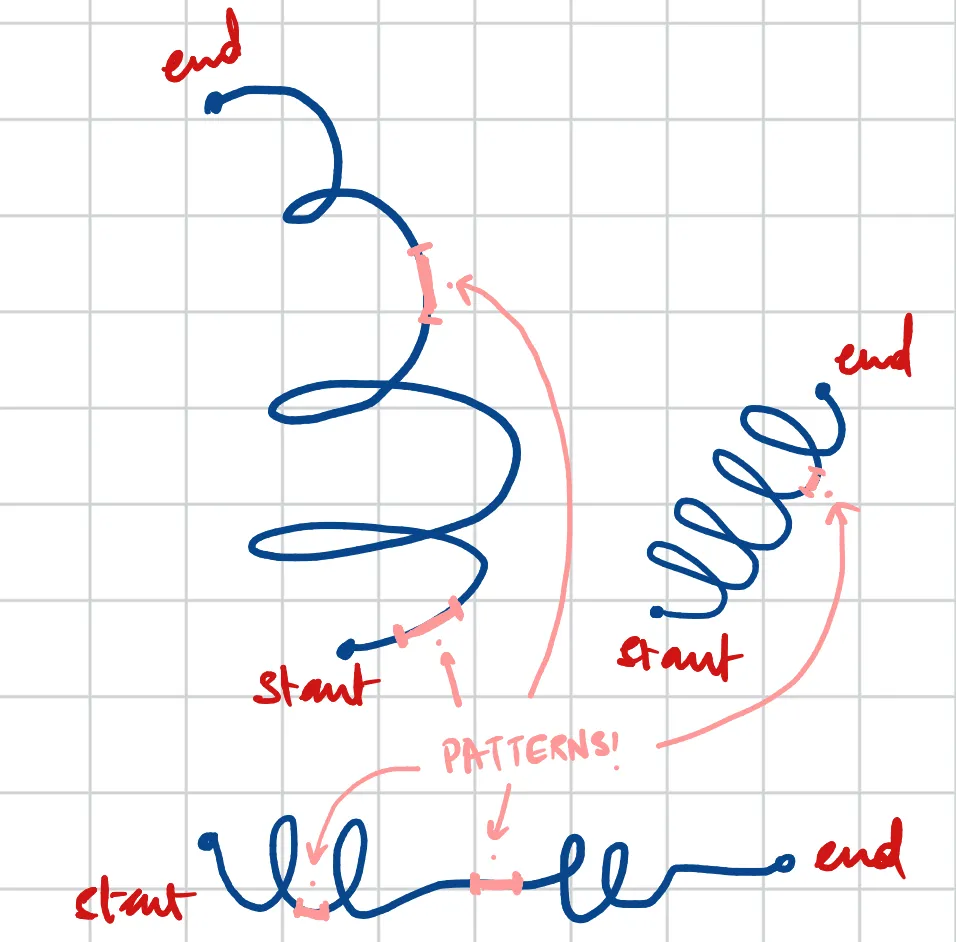
For example, the arrival of the internet caused different cycles of user subscriptions in the Newspaper models of publishing (physical, local vs online, global). You still have to subscribe, digital or physical, but the digital experience is meaningfully different.
Or long-distance communication (phone calls vs video calls) - the nature of the call has changed, even if you're still just calling to say hi.
The usefulness of Spirals
As a generally curious person I feel Spirals are an incredibly useful tool at many levels and across many domains.
You can use them to ask so many questions. Some quick examples:
- Am I repeating the same behaviour as my parents - as a partner, while parenting etc? - Spiral of personal growth
- Will my manager have a different perspective on this data gathering case study as compared to my last analysis? - Spiral of managerial relationships
- What are some technological changes happening in the industry next to mine which I should start paying attention to? - Spiral of industry/career trajectories, Spiral of technology
- Oh, all food cuisines have some manner of carb and protein and fat combination which the economically poor used to eat and has now become a staple of modern world as being "whole food" that is also "fast food"! - Spiral of food and civilization growth
- What is the similarity between a croissant from Paris and the Indian potato patty in how the butter and oil interact in between the layers?
- What do DJs like Fred Again have in common with Jazz legends like Louis Armstrong, Miles Davis and John Coltrane? - Spiral of musical sampling and improvisation.
You can go on indefinitely! Once you understand this notion, you start seeing this idea everywhere!
This idea of Spirals is also captured by a lot of authors/writers over time. Each of them chooses a different Spiral/group of Spirals to study and analyze. A few which I have read/come to mind right now:
- Dale Carnegie's book "How to Win Friends and Influence People"
- Carlota Perez's book "Technological Revolutions and Financial Capital"
- Ray Dalio's book "The Changing World Order"
- Andrej Karpathy's frequent commentary of how LLM inference is similar to CPU processes (speculation, software is changing again), or his insights on AI's impact on software development
- Ben Thompson's "Aggregation Theory"
This also appears in technology and programming frameworks.
- GPU processing and HPC smell like the same paradigm, but at different scales, and often have a lot to learn from each other
- Agentic orchestration frameworks and the Design Patterns from the Gang of Four are similarly strong scaffolds which capture programmatic paradigms.
Granted, it's hard to do this all the time. I feel it also has something to do with knowing the history of the system inside out (an idea from Bill Gurley's "Runnin' Down a Dream"): your parents' behaviours, how food is cooked and has been cooked globally, over time, how automation has impacted industries in the past etc.
There's a lot to explore using this framework. I expect to spend some time understanding how AI is affecting me and my profession and my career and life using this framework.